
TL;DR:
- Streetwear expresses personal identity through symbols, colors, layering, and brand choices rooted in culture.
- Authenticity relies on meaningful connection to heritage and deliberate storytelling over hype-driven trends.
- Building a wardrobe around personal narratives and community creates lasting, genuine self-expression in street fashion.
Most clothing just covers your body. But the right streetwear tells your story before you say a word. If you’ve ever felt boxed in by generic mall brands that have no connection to your roots, your values, or the culture you came from, you’re not alone. Streetwear expresses identity through brand choices, graphics, layering, colors, and symbols that signal cultural heritage, subculture affiliation, personal values, and emotional states. This guide is for urban adults who want their wardrobe to mean something. You’ll learn how to find inspiration, build a look rooted in heritage, and verify that what you’re wearing is genuinely yours.
Table of Contents
- Why streetwear is a canvas for identity
- Gathering inspiration and prerequisites for expression
- Crafting your look: Steps to personalize streetwear
- Verifying authenticity: Evaluating results and evolving your style
- Why authenticity, not hype, drives true self-expression in streetwear
- Build your narrative with premium minimalist streetwear
- Frequently asked questions
Key Takeaways
| Point | Details |
|---|---|
| Identity-first approach | Begin with heritage and personal values to inform streetwear choices for authentic expression. |
| Layered symbolism | Combine minimalist fits with subtle symbols and graphics that reflect cultural roots. |
| Community engagement | Test your style by engaging with tribes and receiving genuine feedback to refine your narrative. |
| Avoid the hype trap | Ignore fleeting trends and focus on building a wardrobe that lasts and tells your true story. |
Why streetwear is a canvas for identity
Street fashion has always been a language. Before it had a name, it was already speaking. Skaters wore their bruises and their Vans. Hip-hop artists draped themselves in oversized silhouettes that said something about space, freedom, and refusal to be small. That tradition continues today, and it’s more layered than ever.
Streetwear works as a visual dialect. Every element carries meaning:
- Graphics and back prints signal affiliation, beliefs, or cultural pride
- Color palettes communicate mood, region, and subculture membership
- Layering shows fluency in the style’s grammar
- Brand selection signals values, not just taste
- Silhouette choices reflect how you want to take up space
The gap between mass-market and boutique streetwear is wide. Here’s a quick comparison:
| Feature | Mass-market brands | Heritage/boutique brands |
|---|---|---|
| Design intent | Trend-chasing | Narrative-driven |
| Cultural depth | Surface-level | Rooted in specific identity |
| Graphics | Generic logos | Symbolic, story-based |
| Community | Broad, anonymous | Niche, tribe-like |
| Longevity | Seasonal | Archival |
The boutique side wins on meaning. That matters because streetwear fosters belonging via subculture symbols from skate and hip-hop culture, empowering multicultural fusion and heritage pride. When you wear something that connects to a real community, you feel it differently. It’s not just fabric. It’s a flag.
Multicultural fusion is one of the most exciting forces in modern streetwear. Designers are pulling from Yoruba textiles, Latin cartography, South Asian calligraphy, and East Asian minimalism all at once. The result is a visual vocabulary that reflects the actual complexity of urban life. When done with intention, this kind of fusion is powerful. You can explore how minimalism and storytelling coexist in contemporary street fashion to understand why restraint often amplifies meaning rather than diluting it.
The key insight here is that your clothing choices are never neutral. Every piece you put on communicates something. The question is whether you’re curating that message or just defaulting to whatever’s on the rack. Understanding streetwear as a canvas means taking authorship of what you wear. That shift in mindset changes everything. You can also learn more about balancing meaning and hype when shopping to make smarter, more intentional decisions.
Gathering inspiration and prerequisites for expression
Once you understand the role of streetwear, the next step is gathering inspiration and the right prerequisites. You can’t build a meaningful wardrobe without raw material to draw from.
Start with your actual heritage. What symbols, colors, scripts, or motifs come from your background? A person with Mexican roots might look at Aztec geometry. Someone with West African heritage might study Kente patterns. Latin Americans might explore colonial-era maps and their layered meanings. These aren’t costumes. They’re starting points for something personal.
Here’s where to find quality inspiration:
- Instagram and Pinterest for visual mood boards organized by culture or aesthetic
- Independent designers from your own community who are already doing this work
- Museum archives for historical textile and graphic references
- Film and music from your culture’s most expressive eras
- Street photography from cities with strong local fashion identities
Once you have inspiration, you need to evaluate what you’re drawn to. Use this checklist before adding any piece to your wardrobe:
| Question | What to look for |
|---|---|
| Does this connect to my roots? | Personal or ancestral meaning |
| Is the graphic intentional? | Story-based, not trend-based |
| Does the silhouette fit my style language? | Consistent with your overall aesthetic |
| Is the brand values-aligned? | Heritage, craft, or community-focused |
| Will this piece age well? | Archival quality over seasonal hype |
Authenticity versus appropriation is a real line to navigate. Layering heritage symbols subtly in minimalist fits and customizing for personal narrative is the approach that works. Creative director Humza Syed built his entire aesthetic around Desi streetwear by going deep into his own roots rather than borrowing broadly from other cultures. That specificity is what made his work resonate.
Pro Tip: Before you buy, ask yourself if you could explain the meaning behind a piece to someone who asked. If you can’t, it might not be the right fit for an identity-driven wardrobe.
For a structured starting point, a solid minimalist streetwear guide can help you identify the foundational pieces that work across different narrative directions. And if you’re looking to move away from generic options, exploring alternatives for streetwear can open up brands you may not have discovered yet.
Crafting your look: Steps to personalize streetwear
With your essentials identified, it’s time to execute. Here’s how to craft and layer your signature streetwear look step by step.
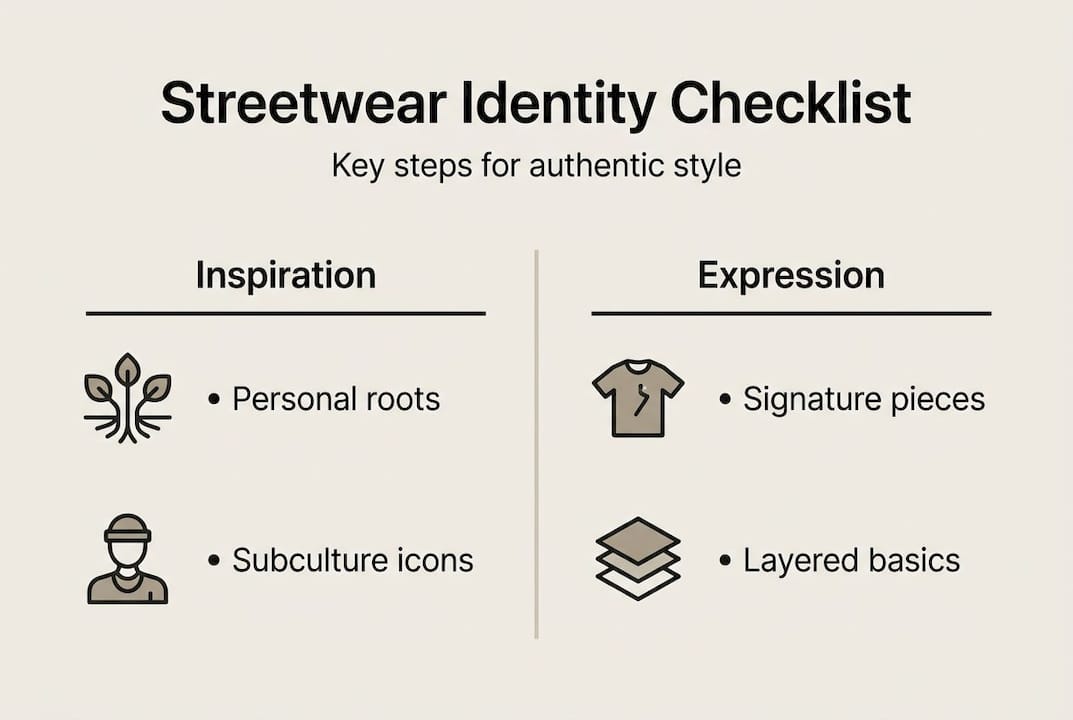
- Define your narrative anchor. Pick one cultural element, value, or story that will anchor your style. This becomes your filter for every future purchase.
- Start with a clean base. Minimalist pieces in neutral tones give heritage graphics room to breathe. Don’t compete with your own statement.
- Choose one hero piece per outfit. A bold back graphic, a meaningful emblem, or a textured layer. One focal point is stronger than five.
- Layer with intention. Each added layer should either reinforce the narrative or stay neutral. Clashing stories create visual noise.
- Customize where possible. Embroidery, patches, and custom printing let you add personal symbols to existing pieces.
- Edit ruthlessly. Remove anything that doesn’t serve the look’s story. Less is almost always more in minimalist streetwear.
Identity through brand choices, graphics, layering, colors, and symbols is a system, not a single decision. Every element should work together.
Common mistakes to avoid:
- Over-branding: Wearing five logos at once dilutes every single one of them
- Ignoring narrative: Buying purely for hype without knowing what a piece means to you
- Mismatched color stories: Pulling from too many palettes creates confusion instead of complexity
- Fusion without research: Mixing cultural symbols you don’t understand risks misrepresentation
“The most powerful streetwear looks are the ones where every element was chosen, not just grabbed.”
Pro Tip: Build outfits around a single cultural reference point per look. If your hoodie references Latin cartography, let your other pieces support that world rather than compete with it.
When sourcing pieces, look for brands that pair with basics naturally, so your statement pieces stay front and center without the whole outfit feeling overdressed.
Verifying authenticity: Evaluating results and evolving your style
Once you’ve crafted your look, here’s how to test its authenticity and improve over time.
Authentic streetwear expression has a few clear markers. Ask yourself:
- Do people from your culture recognize and respect the reference? That’s a strong signal you’ve done it right.
- Does the look feel like you on your best day, not a costume? Comfort and confidence are data points.
- Can you trace every major element back to a deliberate choice? Intentionality is the foundation of authentic style.
- Does your community engage with it? Not just compliments, but real conversation about what you’re wearing.
Feedback loops matter. Share your looks with people who understand the references, not just people who will say it looks cool. Real feedback comes from your tribe, not from strangers who have no context for what you’re doing.
Here’s how mass appeal compares to tribe-building in streetwear:
| Approach | Mass appeal | Tribe-building |
|---|---|---|
| Goal | Maximum reach | Deep resonance |
| Style signal | Broadly recognizable | Culturally specific |
| Community response | Likes and follows | Genuine connection |
| Brand longevity | Trend-dependent | Identity-rooted |
Urban Monkey succeeded by targeting Gen Z niches with hip-hop and skate culture, building tribes over mass appeal. That model works because depth beats breadth every time in identity-driven fashion.
Evolution is part of the process. Your style should shift as you grow, travel, learn, and experience more. The goal isn’t to lock yourself into one aesthetic forever. It’s to stay connected to your narrative as it develops. When you shop smarter, you build a wardrobe that can evolve without losing its core.
Why authenticity, not hype, drives true self-expression in streetwear
Here’s the uncomfortable truth most streetwear guides won’t tell you: chasing hype is the fastest way to lose your identity in fashion. When you buy something because it’s limited, because a celebrity wore it, or because the resale value is high, you’ve handed authorship of your look to someone else. That’s the opposite of expression.
Heritage-based communities figured this out early. Layering heritage symbols subtly in minimalist fits and customizing for personal narrative is what separates a meaningful wardrobe from an expensive one. Humza Syed’s Desi streetwear work is a clear example. He didn’t try to appeal to everyone. He went specific, and that specificity created something universal in its honesty.
Trends will always exist. The skill is knowing which ones align with your narrative and which ones are just noise. When a trend genuinely connects to your story, wear it. When it doesn’t, let it pass. That discipline is what keeps your style coherent over time. Explore how craft and storytelling shape the best minimalist streetwear to understand why the brands that last are the ones with something real to say.
Build your narrative with premium minimalist streetwear
Ready to take your narrative further? The principles in this guide only work when you have pieces that can carry the weight of a real story.
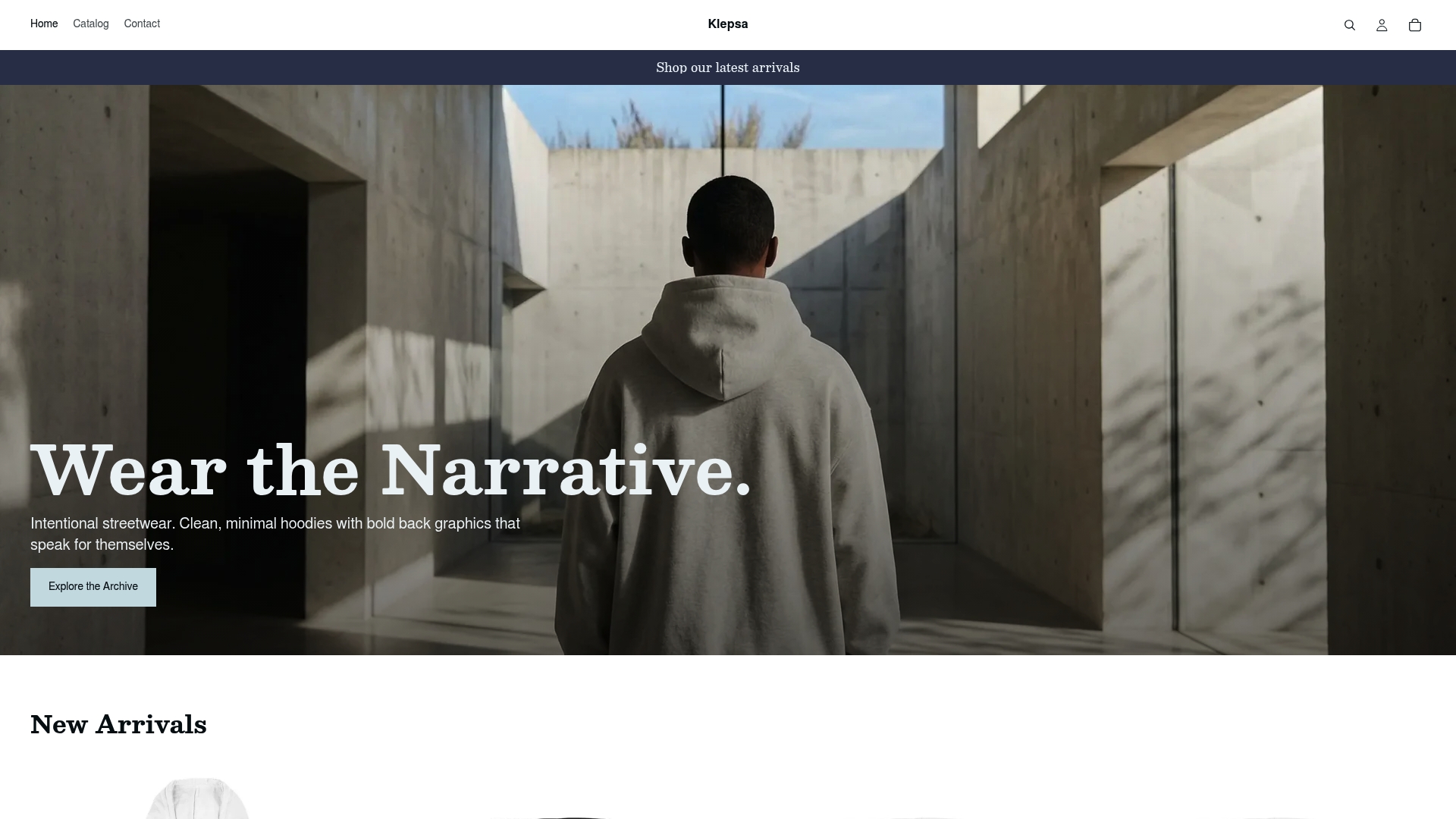
At Klepsa, every hoodie in the Codex I collection is built for exactly this purpose. The Insula Hoodie, the Tempus Hoodie, and the Mentis Labor Hoodie each carry bold, high-definition back graphics rooted in Latin heritage, cartography, and the philosophy of time. Clean front profiles give you the minimalist base. The back tells the story. These are premium 3-end fleece pieces built to last, printed with state-of-the-art DTG technology so the detail stays sharp. If you’re ready to wear something that means something, this is where to start.
Frequently asked questions
What symbols or elements best express cultural heritage in streetwear?
Symbols from your own heritage, like traditional motifs, language scripts, and meaningful graphics, are most effective for authentic identity. Layering heritage symbols subtly in minimalist fits ensures they read as intentional rather than decorative.
How can I avoid cultural appropriation when blending influences?
Prioritize authentic roots and research the meaning behind any symbol before using it. Fusion risks appropriation when symbols are used without understanding their cultural weight, so depth of knowledge is your best protection.
Are minimalist streetwear styles suitable for identity expression?
Yes, minimalist pieces are ideal for narrative layering because they don’t compete with heritage symbols. Identity through layering, colors, and symbols works best when the base is clean and the statement pieces have room to speak.
What’s the best way to build a tribe using streetwear?
Engage with niche communities that share your values and cultural references rather than chasing broad appeal. Urban Monkey built a tribe by targeting specific subcultures with genuine depth, proving that resonance beats reach every time.
Recommended
- Pair streetwear with basics: a guide to effortless style – Klepsa
- Online Streetwear: Meaning, Hype, and How to Shop Smarter – Klepsa
- Contemporary street fashion: minimalism, craft, and storytelling – Klepsa
- Urban fashion style guide: elevate your minimalist streetwear – Klepsa
- How footwear defines streetwear style: trends and self-expression – Dracoslides
- How to create unique streetwear looks with Arizona flair – Arizona Swag